Posts

Showing posts with the label medicine

Hello Brain!

Image
Clever exhibition at the Francis Crick Institute looking at how the human and animal brain works. The show explained complex information relatively simply in a series of booths with a mix of pictures and av material. Each section also had QR codes to link to more detailed research going on at the Institute itself. I particularly interested in the section on sleep and how it is a time for your brain to repair and build memories. Closed 20 June 2025

Innovation and Medicine in 'Marriage-a-la-Mode'

Image
Interesting online lecture from the National Gallery looking at Hogarth’s “The Inspection” from his “Marriage-a-al-Mode” series. Matthew Morgan, art historian and innovator, placed the painting within the artist’s career and talked about how he wanted to paint contemporary moral subjects. He emphasised how the works didn’t preach but set out what would happen if you made the wrong choices. This painting looks at venereal disease both the consequences of it and the medicines available at the time. Morgan told us how the doctor in the image was probably based on a famous doctor of the time and talked us through some of the cures. In the Q&A he tried to broaden this out to look at modern medicine and how medicine can both help and enable taking Ozempic as an example. It was an interesting idea but sadly most of the listeners preferred to ask about the details in the painting as we would have done in a more conventional talk.

AI: Who’s Looking After Me?

Image
Though provoking but also uneven exhibition at the Science Gallery at King’s College looking at the role of AI in medicine. This show raised some interesting issues via a series of installations some of which were very engaging but others I found hard to understand. It was a study in ways of presenting complex information. One moan would be that that, ironically given the subject, some of the av and interactive IT things didn’t work such as one mounted iPad where the next button was hidden by the mount. I would also have liked a bit more on what is happening already not just the ethics of what might happen. My favourite piece was an interactive display where you were teaching a computer bot about love. I did find myself engaging and laughing at its interactions. I particularly loved when it asked questions from song lyrics “What’s love got to do with it?” It was hard to photograph the works so have one of the last creepy one installation with looked at where discarded tech end...

Injecting Hope: The race for a COVID-19 vaccine

Image
Fascinating exhibition at the Science Museum on the development of the Covid vaccine. The show was well explained and divided into six clear sections Virus, Design, Trial, Manufacture, Vaccinate and Future. Each section looked back at what work had been done in the past that this research was building on. I discovered a new name of Onesimus, an African in America who showed his owner a technique for inoculation which he had witnessed and benefited from in his homeland. The show was full of iconic objects from recent years some of which seemed to have been donated to the museum. I loved seeing the laptop and mug used by Tess Lambe, co-designer of the Oxford-AstraZeneca, when working from home to develop the vaccine. To think so much came from such simple things. I also liked a display of items from the day the first person got the vaccine in the UK including the clothes worn by the recipient and the nurse plus the syringe used. The show made me appreciate just what an amazing ach...

On Edge: Living in an Age of Anxiety

Image
Strange exhibition at the Science Gallery looking at anxiety and how an anxious state can fuel positive action. I admit I’d already done a lot that day but I found this show difficult to understand and instead of enlightening me on the topic of anxiety it seemed to bring it on. There were some interesting installations blending contemporary art and science but I found them quite confused and difficult to understand. I liked Alice May Williams’ paintings based on the colours of women’s football strips and using supportive phrases from coaches and Cian McConn’s “Some People Have No Shoes” which lists observations of others which changed his self-criticism of himself.   I like the work shown which by Sarah Howe which used mirrors and blocks to reveal and hide videos of repeated gestures of anxiety. It induced a feeling of confusion and a desire to work out where images were coming from. Closes 19 January 2020

Spare Parts: Rethinking Human Repair

Image
Fascinating exhibition at King’s College Science Gallery looking at how the human body repairs and regenerates both at a physical and metaphysical level and how science can enhance this. I admit I found a lot of these pieces were interesting and beautiful but I must admit I didn’t understand a lot of the descriptions. The gallery itself was exhibit with wooden structures and textiles dividing the space and described as a “prosthesis to the gallery”. My favourite piece was the bee hive shown here where the heat generated by the bees is helping to grow human tissue in the pyramid on the top. A very helpful gallery assistant saw me looking at it and came over to describe it. I was fascinated to watch the bees coming in and out of the gallery via a tube in the wall and the assistant told me about how they speed up or slow down depending on the weather and time of day. Don’t worry the hive is fully encased and there were no bees flying round the show. Closes 12 May 2019 ...

Ayurvedic Man: Encounters with Indian Medicine

Image
Fascinating exhibition at the Wellcome Collection looking at Indian medicine from traditional techniques to the present day. The show was cleverly arranged taking different aspects of medicine such as surgery, anatomy and potions and introducing each with a quote from Paira Mall who was sent to the Indian subcontinent by Henry Wellcome to collect objects for this collection and to acquire local knowledge. The show was multilayers not only being about Indian medicine but also the art of collecting and the nature of colonialism. The star of the show was the Ayurvedic man himself, an 18th century Nepali painting of a man with a detailed text on the parts of the body and the related humours of wind, bile and phlegm. It was show on its own in a booth with a reading of the text in the original language and translation.   I loved the early 19th century European influenced pictures called Company School pictures including one of an operation on a leg. Also a drawing of ...

A Physician’s Cabinet: Sir Han Sloanes Practices of Collecting and Cataloguing

Image
Small exhibition at the British Museum focusing on medical related objects from Sir Han Sloane’s collection which was one of the founding collections of the museum. Sloane was doctor to George II and collected a lot of medical related items, The show used these to show his cataloguing methods and included some of the items with their original catalogue records. As a librarian I was proud of him as an early information manager! Objects included a Chinese ear cleaner,   a print of Siamese twins and a stunning print of dissected testicles. Closed on 11 January 2018  

Wounded: Conflict, casualties and care

Image
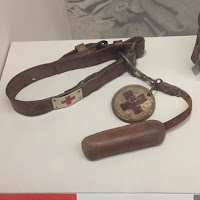
Fascinating exhibition at the Science Museum looking at how the wounded were treated in the First World War and the innovations that were driven by the lessons learnt. I thought I had a good knowledge of the First World War but I learned so much from this exhibition. The first section looked at the chain of evacuation of the injured from the battlefield with displays on each stage from treatment on the front line, though dressing and clearing stations to hospitals and the journey home. There was a wonderful model of a hospital train and I found the front line stretcher moving. I also loved the Red Cross dogs collar. I hadn’t realised the dogs went out onto the battle field and sniffed   to find men who were still alive. They then pulled a piece of clothing off the wounded and took it back as a sign of life. The next section looked at the technological breakthroughs including Marie Curie bringing   x-rays to the front line, a new splint which was developed as ...

Forensics: The Anatomy of Crime

Image
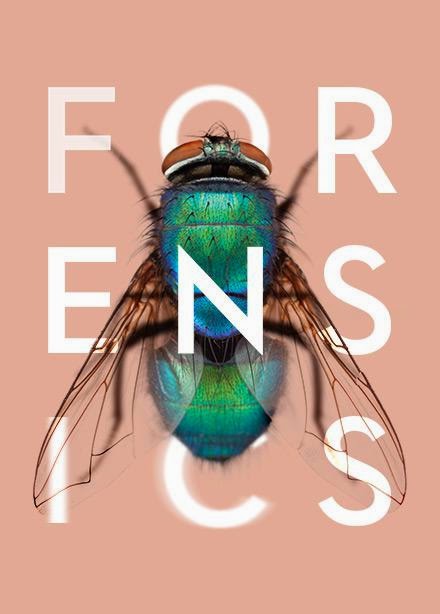
Fascinating exhibition at the Wellcome Collection looking at the history of forensic science. The exhibition was themed by the place where the evidence might be collected or used so there was the crime scene, the morgue, the laboratory, the search and the courtroom. I loved the Nutshell Studies of Unexplained Death made by Frances Glessner Lee, small 3D models of crime scenes still used to train police today. Also the plan of the area where Jack the Ripper’s 4th victim was found made by a city architect which included a sketch of the body in situ. The morgue section was grisly and I found it quite hard to look at the post mortem table but the early pathology books were fascinating. The laboratory sections looked at the development of mug shots and the use of fingerprints. The courtroom looked at how scientific evidence has been used in court but also looked at press coverage of court cases. The Medical Witness Act of 1836 allowed qualified medical witnesses to te...

Now+then: three decades of HIV in Merseyside

Image
Small but interesting display at the Museum of Liverpool on the story of HIV on Merseyside. I lived in Liverpool 30 years ago this autumn and felt that was the year I starting reading about HIV and AIDS in the newspapers as a disease in America. I was therefore stunned to see that someone had already died of the condition in Liverpool the year before.   The display was interesting in that it showed not only early reaction to the illness but also how people were now being supported on Merseyside by Sahir House who had helped to mount this show.

“All engrossing, all-devouring war…”

Image
Interesting exhibition in the library of the Royal Society of Medicine looking at medicine in the First World War. This was arranged under fairly broad themes but there were some fascinating books. I was interested in the ones on plastic surgery and it was particularly nice to see a copy of the book by Gilles as so much has been made this year of the Tonks watercolours of soldiers Gilles was working on. I liked the small practical books to be taken out to the front including illustrations on how to carry a stretcher. There was also a section on propaganda such as a book on the psychology of the Kaiser. The home front was not forgotten with books on the control of drinking and rationing.

Front line nurses: British nurses of the First World War

Image
Charming exhibition at the Royal College of Nursing looking at nursing in the First World War. Although this display was small, just two cases, it put the emphasis on telling the stories of a few nurses showing their diaries and photographs alongside other objects. There were also four autograph books showing how popular it was for nurses to keep these and to get the men they nursed to sign them. I loved a panoramic picture of staff at Endell Street Military Hospital with their dog. Also one of Mabel Pearce in her nurse’s uniform with her twin brother. There was also a good display tracing an injured man’s journey from the battle field to the convalescent home looking at stretcher bearers, ambulance drivers, field hospitals etc.  

Foreign bodies, common ground

Image
Unusual exhibition at the Wellcome Collection following the work of artists commission by them to work in health research facilities around the world. This was a mixed bag of work with some artists working with the communities they were in to produce the work and other just taking inspiration from the place. A fun idea was by Miriam Syowia Kyambin and James Muriuhu working in Kenya. They set up a photo studio made to look like    doctor’s office and filled it with props. They then asked local people to come and pose in it in white coats decorated in American fabric choosing the props they most feel influence research. During the run of the show on certain days there is a photographer present so you can join in and be part of the project. My favourite piece was a necklace of fossils by Kater Paterson who was based in Cambridge. She took her inspiration from DNA research and each bead in the necklace was fashioned form a fossil and they are threaded in an evolutiona...

Mind maps: Stories from psychology

Image
Informative exhibition at the Science Museum looking at the history of the study of how nerves and the brain relate to thoughts’ behaviour and mental health. It began with a grizzly preserved nervous system from the 1650s varnished onto a dissecting table but rapidly moved on to the work which John Wesley did on the use of electricity to treat nervous disorders. I loved a painting of a woman being treated in her home surrounded by her family with her chair on upturned glasses to control the flow of the current. It also looked at how the complaint of nervous exhaustion grew more prevalent at the end of the 19th century which led to the study of the link between nerves and behaviour and how psychiatric drugs were discovered after the Second World War with the depression being seen as a chemical imbalance. My favourite object though had to be the souvenir picture of Pavlov’s dogs! They all looked very happy!

Doctors, dissection and resurrection men

Image
Grisly but fascinating exhibition at the Museum of London looking at the history of dissection and in particular where the surgeons and students got the bodies from. I’d not really thought before that pre-anaesthetics   surgeons had to be very quick so they had to have bodies in order to be able to practice. The first section looked at resurrection men who took bodies from cemeteries to sell to the surgeons. It looked at what measures people too to avoid this fate plus what happened when the resurrection men got greedy and turned to murder to acquire bodies. I loved the very vivid reading of a contemporary ballad. Most fascinating through was the room looking at skeletons which were excavated in 2006 at the Royal London Hospital which showed evidence of dissection. There was evidence from the time that the hospital had robbed its own graveyard for bodies. My only slight worry was that as a chaplain at the time had fought to get all bodies a decent burial what woul...