Posts

Showing posts with the label ancient

Ancient India: Living Traditions

Image
Interesting exhibition at the British Museum looking at the origins and visual development of Jainism, Buddhism and Hinduism. I felt the show was wrongly titled as a lot wasn’t ancient. I thought I’d read somewhere that it was about how India influenced Greece and Rome but I should have paid more attention to the subtitle. However I liked the way the show began with ancient sculptures from the three religions and ended with contemporary ones.   There were some beautiful objects and it was well explained but, as ever in large British Museum shows, the low wordy labels created bottle necks not helped by people who’d opted for the large print booklets of labels still standing in front on the label to read the booklet!   It did make me muse on how art, like standard archetypal human stories, develops in a similar way everywhere. A lot of the art and sculpture from around 1000AD had a feel of Norman art and a lot of the iconography felt similar like the use of halos.  ...

Mumbai + London : New Perspectives on the Ancient World

Image
Small exhibition at the British Museum showing three statues from three different ancient cultures. The show marks a collaboration between the museum and one of India's leading museums, Chhatrapati Shivaji Maharaj Vastu Sangrahalaya (CSMVS), highlighting the Mumbai museum's ambitious Ancient World Project. These three statues from Egypt, Greece and India would not normally shown together but the display aims to make comparisons with the varied ways ancient civilisations imagined the divine in physical form. I did find the show felt quite thin. It just showed the three statues with a few questions around the walls about the nature of museums. A beautiful display but I wanted more meat. Closes 11 January 2026

Silk Roads

Image
Amazing exhibition at the British Museum looking in detail at the concept of the silk roads. Think of it more as the story of trade in the 1st millennium going geographically from Japan to Ireland. It looked at trade in both directions as well as the spread of religions along the routes. There were some breath taking   pieces such as the earliest known chess pieces, an ivory casket which pairs the Magi with Wheland the Smithy and had Romulus and Remus on one side, a lovely Cosimo and Damian and a Chinese shoe dated about 700AD. It told the story fairly clearly but it was a complex and interwoven narrative and I think I’ll need to come again at least once to get it straight in my mind. It suffered a bit from slow readers many of which seemed to be from the countries represented and I suspect might have been translating the labels. Closes 23 February 2025 Reviews Times Guardian Telegraph Evening Standard    

The Silk Roads: Art and Architecture

Image
Excellent two day online course from ARTScapades looking at the history of the Silk Roads and how ideas as well as goods travelled along them. Susan Whilfield from the University of East Anglia guided us through starting with an overview of the history of the routes and the religions which operated along them. She pointed that the routes were a lot wider than usually thought and stretch into Japan at one side and Scandinavia at the other. She then went on to talk about silk itself and how its trade and production travelled along the routes starting in China. She talked about the different qualities of silk that were produced. One the second day she looked at the role of pilgrimages, both Christian and Buddhist, in spreading ideas and bringing goods and souvenirs back. I was fascinated by a Buddhist statue which had been found in Scandinavia with signs that it had been displayed in the same was as they displayed Norse gods. Finally she focused on four objects looking at their t...

300,000 Kisses

Image
Fun discussion at Charleston Farmhouse as part of the Charleston Festival about the process of putting together stories of queer love from the ancient world for an illustrated book. Poet Seán Hewitt and artist Luke Edward Hall were guided by the chair Nikita Gill though describing the collaborative process, from which stories were chosen to how the book was put together. I include the event in this blog to recognise the charming illustrations by Luke Edward Hall and I will be looking out to see more of his work.  

Picasso e l’antico

Image
Intriguing exhibition at the Museo Archaeologico Nationale de Napoli looking at how Picasso was influenced by classical art. Picasso made two trips to Naples in 1917 and was Influenced by his trips to this museum and in particular the Farnese Hercules and Bull as well as frescos from Pompeii.   The exhibition was in the room where the two sculptures are based and cleverly wove the narrative around them. The main works by Picasso used to illustrate the influence was the Vollard Suite of prints from the 1930s and I was interested to see that they used the set from the British Museum. It was a nice touch to include a display on what the museum would have looked like in 1917. Closed 2 October 2023  

Luxury and Power: Persia to Greece

Image
Stunning exhibition at the British Museum examining the relationship between Ancient Persia and Greece and their attitude to luxury.   The show was divided into three. It explained how the Greeks condemned Persia for their love of luxury but how Persia were using it to assert power. It then looked at the effect of the Greco-Persian Wars and how, although Persia were defeated the effect they had on Greek style and fashion. Finally it looked at Alexander the Great’s conquest of Persia again leading to a blending of aesthetics. The story was explained well but the best thing was the amazing objects. I think it included some of the most beautiful things I had ever seen and I see a lot! They cleverly used drinking vessels as the main example of cross over in the centre of each display from early Persian silver, through fabulous Greek ceramics to a hoard of nine exquisite pieces. I love the ornate, rich pieces but I think my favourite might have been this perfect ceramic head whic...

Hieroglyphs: Unlocking Ancient Egypt

Image
Clever exhibition at the British Museum looking at how the meaning of hieroglyphs was deciphered   and what that discovery told us about Ancient Egypt. I say clever because it managed to tell a few stories at the same time without it feeling muddled. The first room briefly looked at how the meaning of the symbols was lost as Egypt was conquered then you moved into a section on how Western and Arabic scholars had tried to decipher the objects they found. I was interested to see Alberti was amongst them. The core of the show looked at the finding of the Rosetta Stone with the stone itself taking centre stage and the race between Thomas Young in England and Jean-Francois Champollion in France to work how it could help to unlock the secret then how further travel and research enabled Champollion to work out a more complete picture. Finally the show looked at some of the things which were learnt by being able to read the symbols and subsequent script using wonderful objects. I ...

Alexander the Great : The Making of a Myth

Image
Fascinating exhibition at the British Library looking at the stories surrounding Alexander the Great and how they developed. The show began by looking at the birth and education of Alexander, both real and mythical, then moved onto his conquests. It then went on to the myths surrounding his further travels and then his death. Being the British Library the show was heavy on books and documents but I would like to have seen more objects both about him and seeing him in his time. As my companion on the day said he’d have preferred a British Museum take on the subject. That said I was interested that’s the stories basically came down to four ‘books’ in different version including Plutarch’s “Life of Alexander” and the “Romance of Alexander”. The show has various versions of these each being used to show a different aspect of the story. They varied in date but my favourites were the illuminated manuscripts. There was lavish use made of texts from the areas Alexander conquered so th...

Domus Grimani 1594-2019

Image
Fascinating and dramatic exhibition at Palazzo Grimani in Venice reconstructing a collection of antique sculpture that has previously been in this particular space after 400 years.   I’d read an excellent article in Apollo Magazine about the bringing together of these sculptures so was delighted to be able to see it. In the palazzo there is an amazing, vaulted room which has housed much of the collection of Giovanni Grimaldi which has ended up in a section the Musee Correr which was being refurbished. While this has been happening they have been moved back to their original home. Here’s hoping they stay. It is a stunning collection but is somewhat mugged by the splendour of the room. With its amazing, coffered ceiling with a 2nd century Ganymede and an eagle soaring up into it. It was hard to focus on the amazing works below. Its power was more in its whole effect that the composite parts. Closes 27 November 2022  

An Intimate Life of Tutankhamun

Image
Excellent online lecture from ARTscapades looking at the life of the pharaoh Tutankhamun on the 100th anniversary of the discovery of his tomb. Garry J Shaw, author of “The Story of Tutankhamun” took us through the boy king’s life via the objects in the tomb highlighting some of the more personal items which he probably used in life. He was seeking to reinstate the boy who has become secondary to his goods so he also looked at the historic evidence of his life. He painted a picture of a boy who loved chariots as his tomb had two in it including one with repaired wheels. There were also chariot gloves, as shown here, and socks to protect his feet from debris. He focused on the more personal items rather than the well-known precious pieces. Shaw concluded that Tutankhamun may not have ruled for long but he started to restore Egypt to its old religion, a faith he hadn’t know himself, as his father had turned to the new cult of Aten. He talked about how he had health issues such as ...

Shattered Glass of Beirut: a Story of Collaboration and Repair

Image
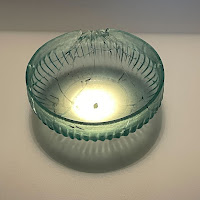
Fascinating online talk  and exhibition from the British Museum on the repair of a collection of ancient glass which was destroyed in the August 2020 explosion in Beirut. I am reviewing these events together as after the talk there was little to say separately about the exhibition except how beautifully the repaired works were shown. The talk had brought together Nadine Panayot, the director of the American University of Beirut Archaeological Museum where the pieces come from and Duygu  Çamurcuoğlu,  from the British Museum who helped to conserve the pieces on show. Panayot spoke movingly about starting her new role at the museum just days after the explosion when it lost a case of 74 pieces of glass and how the British Museum had phoned the day after the explosion offering help to rebuild the collection. Çamurcuoğlu  then talked about receiving nine vessels to rebuild, the pieces having been brought together and identified in Beirut. It was interesting to hea...

Inspired by Stonehenge and Its World

Image
Interesting online discussion from the British Museum looking at how Stonehenge has inspired artists in the past and now. Chaired by David Dawson of Salisbury Museum the event brought together another curator, Harriet Still from Wessex Museums and two contemporary artists, Rose Ferraby and Jeremy Deller to discuss how the monument has provided inspiration. The discussion got philosophical at times. Still mainly talked about Thomas Hardy and Tess of the D’Urbervilles including how he was an amateur archaeologist and had a standing stone in his garden. She also looked at how the stone circle has appeared in other literature and 19th century painting including Turner. Ferraby is interested in how archaeologists see and imagine the world and how this can be represented in museums. She had been commissioned by the British Museum to produce a piece on Seahenge for the current exhibition and she talked us through her creative process for this. I was interested to hear her mention Piper...

Ancient Greeks: Science and Wisdom

Image
Disappointing exhibition at the Science Museum looking at how the Greeks sought to understand the world around them. I say disappointing because it was a small show and the subject deserved a lot more space and objects. It was cleverly laid out with the subject areas based on the muses and the first object was a rather beautiful sarcophagus with the nine muses one which was projected a clever AV introduction to the show, however it all felt a bit thin. The picture comes from a section on how Aristotle classified animals and sea creatures and comes from a wonderful selection of platters with accurate sea creatures on them. Another section looked at the idea of the ideal body   and how sculptors generated the proportions for a statute based on multiplications of the smallest joint in the little finger. I was most interested in the section of music and how they studied the mathematics of it. It was interesting to see a pair of pipes which would have been blown simultaneously. ...

Nero: The Man Behind the Myth

Image
Excellent exhibition at the British Museum looking at the life and times of the Roman emperor Nero. This show was visually stunning but also told the story clearly and carefully explaining the myths and reality of his reign. There were some wonderful objects mainly set out well to allow social distancing although I’m afraid showing coins doesn’t really work at the moment. There was a bit of queuing to start with but people spread out after the first section. You were greeted by this statue of the young Nero and this was followed by a lovely line up of his ancestors and a good explanation of how he came to power. I am sure I was not the only person of my age relating the statues to the actors in “I, Claudius”. There was a good section on his conquests including Britain with a moving slave chain found in a bog in Wales. I particularly liked a section on his love of theatre with some lovely frescos of actors and theatres which sat with displays on gladiatorial fights including some...

The Great Library at Nineveh

Image
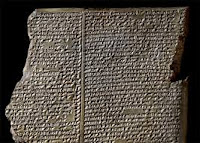
Enthusiastic online lecture from the British Museum on the cuneiform tablets discovered at Nineveh, the remains of Ashurbanipal’s Great Library. Irving Finkel talked us through some of the most important tablets including the one shown here which is a non-biblical version of the story of the Great Flood. He explained how the emperor commissioned copies of documents which were produced by the scribes in the library as well as demanding originals from other libraries around the empire. He talked about how the tablets are displayed at the British Museum and how they were used in the wonderful Assyria exhibition and showed us relief sculptures which showed scribes in the field recording details of a battle. It was a bonus to find the event was chaired by Edmund de Waal to mark his installation at the museum “Library of Exile”. 

Early Christian Rome

Image
Excellent three week online course from the London Art History Society looking at the art and architecture of Early Christian Rome. John McNeill was our guide on what felt like a wonderful tour of the city from about 35 to 650. In week one we looked at the catacombs and the great funerial basilicas. I was fascinated in the very early Christian images in the catacombs from secret signs to the start of the iconography we know today. Week 2 was on architecture looking at both existing basilica churches and the Old St Peters. I realised how many of these I had visited on a trip to Rome without really appreciating what I was looking at and it’s age. I so want to go back. Finally week 3 looked at the start of cycles of painting and mosaics in churches and its origins in sarcophagi decorated in scenes from the Old and New Testament. I was also fascinated by door panels which survive from about 430 at Santa Sabina. All in all an interesting three hours leaving me with much to look up...

Havering Hoard : A Bronze Age Mystery

Image
Fascinating exhibition at the Museum of Docklands examining a Bronze Age hoard found in Essex. The display took you from the finding of the hoard in 2018 though what it contained and why it might have been buried to how it was conserved to go on show and what more there might be to learn.   The objects seemed to be the working pieces from a metalworkers business and included ingots of copper, broken pieces, mis-fired pieces and the metal which would have dripped out of a mould. I found a lovely razor they’d found quite moving as it felt like such a personal item.   I liked the section showing each hoard and explaining four reasons why they might have been buried. I was drawn to the one suggesting that as it is late Bronze age that it was buried as a redundant material/skill with the coming of iron. Also the idea that as metalworkers were itinerant they might have buried things they had gathered in one settlement to come back and use on their next visit.   The s...

The Antique as Principle and Guidance: The Point of View of the Artist

Image
Excellent lecture as part of London Art Week Digital examining the role of artists in establishing the canon of archetypal antique statues. Given by Adriani Aymanino the talk looked at what statues were available to artists at various periods and, taking The Laocoon as an example, he looked at the different reasons artists drew these works from records of expression, thought anatomical study to compositional studies. He spent some time discussing the concept of ideal proportions and beauty that these statues were thought to demonstrate and the role this played in an artists training within the academies and why this fell out of fashion in the late 20th century.

Historical City Travel Guides

Image
Fun series of blog posts on the British Museum website imagining contemporary travel guides of ancient cities.   Each follows the pattern of a modern travel guide with sections on how to get there, how to get around, what the sites are, what to eat and where to go shopping. They are illustrated with pictures and objects from the collection. This is such a witty idea but the articles are also packed full of information. I hope there are more to come!   I think my favourite was the Edo one as all the pictures are contemporary Japanese prints including this wonderful one of a busy shopping street. There is also an article on London landmarks using prints and drawings from the collection for those of us dreaming of a day out in London. Edo (Tokyo),early 19th century T hebes, Egypt, 13th century BC Athens, 5thcentury BC Rome, 1st centuryAD Ninevah, 7th century BC London Landmarks