Posts

Showing posts with the label Aliki Braine

Reflecting on Studds : Portrait of a Horse

Image
Interesting online lecture from the National Gallery looking at their Stubbs exhibition as it came to an end. Aliki Braine discussed the place of Stubbs in the National Gallery with the iconic “Whistlejacket” bookending one end of the longest vista in the gallery. She described him as “A place finder for visitors”. I hadn’t realised that he’d only been acquired by them in 1997. She discussed whether we can consider “Scrub”, the focus of the show, can be considered to be a portrait of a horse, looking at what she felt constitutes a portrait and concluding that it can be. She also looked at the two other projects represented in the show, Stubbs book on the anatomy of the horse and a series of portraits of all the thoroughbred horses over 50 years, a project which failed. This was an interesting lecture but very similar to others I had done on the show. I’d like to see these talks at the end of shows having more of a sense of reflecting on what had been learnt from seeing the wor...

The Story of Tudor Art: Online Members’ Book Club

Image
Excellent online lecture from the National Gallery looking at art from the Tudor period. Aliki Braine interviewed Christina Farady, author of a book of the same title as the talk, as part of the Members’ Book Club series. Faraday explained how the Tudors hit a sweet spot in research terms and in the popular culture as they are strange enough to be a mystery but close enough for us to be able to find out more. She said the monarchs are iconic and identifiable “like face cards in a deck of cards”. She explained how she hopes the book fills a gap as she covers both paintings and objects and looks at art not just for the court but also for the newly rising middle class or Middling Sort. She explained the objects were more valuable than paintings at the time and had the advantage of being portable. She used this portrait of Margaret Beaufort to point out the sort of valuable objects they owned. Faraday also pointed out that the country wasn’t as isolated as we tend to think and talke...

One Painting, One Story : Van Gogh’s Sunflowers

Image
Delightful lecture at the National Gallery on Van Gogh’s “Sunflowers” painting. This was the first of a series of member talks based on a new set of books on individual paintings in the gallery to mark its 200th anniversary. In this event Aliki Braine interviewed the art critic Martin Gayford about his work on this painting. The started by asking why he chose this work and he described how, when writing a book on Van Gogh and the Yellow House, he had come to the gallery and sat with the paintings from that period including this one. They discussed how Van Gogh had journeyed south to find new light to paint and how sunflowers may have symbolised this to him. They also talked about how this series of paintings were received by Gaugin for whom they’d been painted for his arrival at the Yellow House and what the hang of them might have looked like. Finally they looked at how the work has been viewed since and why it has come to symbolise the artist to many viewers. This was my f...

The Art of Posing

Image
Interesting online discussion from the National Gallery focusing on posing. Aliki Briane, artist and art historian, interviewed two contemporary artists who make work by posing for images. Peter Braithwaite, opera singer and artist, recreates historical portraits of black figures, and Dominic Blake, is a life model at the Royal Academy as well as being an art theorist and has taken the modelling out of the studio into other spaces. I enjoyed their insights but I would have been interested to hear them talk more widely about the work of models over the centuries and about what it is like to pose for long periods rather than just posing as an art form.

The Artist Out of Doors

Image
Excellent online three week course from the National Gallery on landscape painting and how artists worked out of doors and represent themselves in the work. Aliki Braine, artist an art historian, guided us chronologically through the topic starting with how landscape painting grew out of map making and then often forms a stage set for a biblical or mythical scene, moving on to how it represented leisure and wealth in the 17th century and onto the from accuracy to atmosphere in the 19th century. In taking this approach she also laid out clearly the various theories of landscape painting over the centuries with good quotes which she then used to discuss a series of images. She also looked at how artists represented themselves in the work from including draftsmen in the image to emphasis that they had been to the place and recorded it to later artists whose hand we see in their brushwork. I was impressed at the array of artists that we covered and I discovered a number of names who...

Degas in Practice: Behind the Models

Image
Brilliant four week online course from the National Gallery focusing on the female subjects and models in Degas’s work. The course complimented the excellent exhibition on the gallery looking at Degas’s “Miss La La at the Cirque Fernando” and was delivered via a variety of speakers, a style I like as it gives different viewpoints in a longer course. In week one Aliki Braine gave us an overview of the artists life and main subjects. This was followed the next week by talks from Daphne Barbour from the National Gallery in Washington and Johanna Conybeare talking about his process from drawings to making small sculptures to work from. Week three saw the return of Braine as a replacement speaker who picked up the talk on Degas and women looking at the women in his life and the subjects he chose to depict. She discussed why we often view him as a misogynist now and whether that was justified. Denise Murrell from the Met then looked at his trip to New Orleans early in his career and t...

Saint Francis in Fresco

Image
Disappointing online lecture from the National Gallery on Giotto’s St Francis frescos in the church at Assisi. Artists and art historian, Aliki Braine, guided us though the technique of fresco and the narrative of the major fresco in the upper church as a coda to the National Gallery’s current St Francis exhibition which, of course, couldn’t include the frescos. It is always wonderful to look at this cycle again and Braine had beautiful illustrations but I would have liked a bit less on the technique, which I have studied quite often, and more on the iconography of the frescos themselves, why they were so groundbreaking and how they helped to establish the fame and importance of Francis.

Thomas Gainsborough: Painting Identity

Image
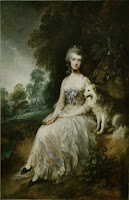
Excellent three week online course from the Wallace Collection on Gainsborough. In the first week Karly Allen took two portraits in the Wallace Collection, Miss Elizabeth Haverfield and Mrs Mary Robinson (Perdita) to look in general at Gainsborough’s portrait work and to place them in the context of the time. She discussed how they became the main source of income which kept him away from the landscape work he loved. Week two with Aliki Braine turned to landscape and again placed Gainsborough’s work in context as well as looking at how he succeeded in elevating the genre combining the accuracy of Dutch 17th century work and the imagination of Claude. She included an interesting section of optical devises from Claude mirrors to camera obscurer. Finally Jo Ryhmer looked at the legacy of Gainsborough and using examples from the Wallace Collection putting him in a line of artists who admired the work of the Dutch artist Jacob Von Ruisdael from Gainsborough himself to Constable, thro...