Posts

Showing posts with the label Gustav klimt

Gustav Klimt : 47 Drawings

Image
Beautiful exhibition at Eames Fine Art of prints made from Klimt drawings in 1915. These were delicate drawings of women both clothed and naked dream with a few expressive lines. Weirdly despite being in black and white your eye imagined Klimt’s colours in them. There was a good narrative about how Klimt used drawing and describing how and why the prints were made. The prints were collotypes and the blurb explained the process. Most movingly the original drawings had been in the collection of August and Serena Lederer that was later seized and largely destroyed by the Nazis in 1938 so most of the originals are now lost. Thank you to the chap looking after the gallery for a warm welcome and a good conversation about the work. Closed 29 March 2026

Klimt and Beethoven: Artistic Rebellion in Fin de Siècle Vienna

Image
Excellent online lecture   from the Foundling Museum looking at Klimt’s Beethoven Frieze as part of their music and art series. Sarah Jaffray, an art historian, led us through what was   happening in art in Vienna around 1900 and the role of the Secession movement. She described their HQ building which the frieze was shown and explained how it was a radical space for showing art. She then talked about why the movement was attracted to Beethoven even though this was more because of the image of him in Mahler’s novel “A Pilgrimage to Beethoven”. This led to the 14th Secession exhibition being devoted to the composer to mark the 75th anniversary of his death, focused on a sculpture of him by Max Klinhen. The frieze decorated an anti-chamber to the sculpture and Jaffray led us though the iconography of it in some detail.

Klimt/Schiele: Drawings from the Albertina Museum, Vienna

Image
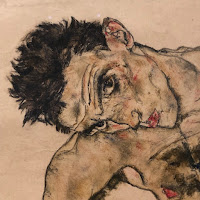
Beautiful exhibition at the Royal Academy of works on paper by Klimt and Schiele from the early 20th century. There were some stunning drawings in this show which were nicely hung and described. I thought the only shame was that it felt like a competition between the two artists won by Schiele as his works were more visceral. However it was clear that the two artists used drawing in different ways and Klimt’s, on the whole, were preparatory drawings for paintings and frescos whereas more of Schiele’s were finished works in their own right and therefore making a more purposeful statement. All the works were a lovely study of a particular time and place and gave a real sense of the people and life in Vienna in the years before the First World War. I loved Klimt’s drawings for his well-known portraits which were very freely drawn catching the stance and clothing of the sitters rather than facial likenesses. The series of self-portraits by Schiele not only gave a sense of how ...