Posts

Showing posts with the label London Art History Society

‘I Was a Rich Man’s Plaything’: Pop Art in Britain

Image
Clear online lecture from the London Art History Society looking at British Pop Art. Ben Street guided us clearly through the British Pop Art movement and how it differed from its American counterpart. He started by looking at the definition of Pop Art as laid out in a 1957 letter by Richard Hamilton. He also looked at how art before this in this country had been quite sombre and austere. He told us about the 1956 Whitechapel Gallery exhibition “This is Tomorrow” which included art, architecture, fashion and more and then led us through some of the main British Pop Art works often comparing it with American pieces. He looked in particular at work by two women in the movement, Pauline Boty and Jann Haworth. He concluded that British Pop Art had more of a sense of the hand crafted whereas America looked to the mass and mechanically produced.

Sir Joshua Reynolds and the Indian Cashmere Shawl

Image
Fascinating detailed online lecture from the London Art History Society tracing changes meaning of depictions of Cashmere shawls in three portraits by Reynolds. Taking portraits of Captain John Foote, Mrs Horton previously Nancy Parsons and Mrs Baldwin, Jennifer Van Schoor, art director and graphic designer, traced the meaning of shawls in the 18 th century. For Foote the shawl was part of a diplomatic gift and showed his status within the East India Company on his return to England soon after this painting was made returnees from India were starting to be seen unfavourably and as ostentatious. Foreign luxuries were seen as threatening manners. The shawl in the painting of Nancy Parsons has shades of promiscuity as she was known to be the mistress of the Prime Minister the 3 rd Duke of Grafton. It was linking the exotic with low morals. Finally in the portrait of Mrs Baldwin it is still a sign of the exotic but in this case it was being seen as more acceptable as she was fro...

The Romsey Rood: an Anglo-Saxon Artefact in the Anglo-Norman World

Image
Intriguing online lecture from the London Art History Society looking at a wonderful Anglo-Saxon crucifix on the outside of Romsey Abbey. Richard Plant, author on this period, shared thoughts on the Romsey Rood starting by describing it and comparing it to other crucifixes of the period. I love this period of art but don’t know a huge amount about it so it was fascinating to be introduced to some lovely objects. He then thought about rituals which may have been linked to this work such as the idea of fire for lighting candles being kept by a church door. He also mused on why it was on the nuns side of the church and whether they had some ritual linked to it. Finally he looked at why this Anglo-Saxon work might have been incorporated into a later Norman church. Did it have some sentimental meaning to the local people? Two Anglo-Saxon saints and a king were buried there so was the object linked to one of them? Had the nunnery become a home for Anglo-Saxon ladies post Conquest? Lot...

Toulouse-Lautrec: From Albi to Paris

Image
Interesting online lecture from the London Art History Society on Toulouse-Lautrec. Writer and lecturer, Juliet Heslewood, led us through Lautrec’s life and art discussing how although he was a painter it was his poster designs which were pioneering and for which he is most well known. She discussed how his art reflected his lifestyle and outlined the main subjects he painted from animals to brothels and places of entertainment. She also highlighted the main models he used and pointed out how many of them had red hair at a time when artists were studying colour contrasts. As I typed the talk up I realised it had been a bit disjointed, swapping between subjects and models, to maintain a chronological narrative. I’m all for chronology but I this case it might have been better to take a list based approach.

The Chapel of Carlo Spiafame, 'Native of Lucca', in Avignon Cathedral

Image
Intriguing online lecture from the London Art History Society focusing on a specific chapel in Avignon Cathedral. Geoff Nuttall led us through this chapel and specifically the fresco outside it from around 1430. He told us about the family to whom it was dedicated and specifically about the father, Carlo Spiafame who had come to the city in 1385 from Lucca as part of a banking family, to service the papal court which was based there at the time. He talked about how the court brought Italian artists to the city but he thought the fresco was by a French artist who was influenced by them, possibly Jacques Iverny. He also speculated that they may have seen the Belles Heures de Duc du Berry as the Baptism scene is very similar and the Spiafame family had been involved in valuing his possessions on his death. He discussed the strange iconography of including donors in a scene of the Baptism of Christ and said this was the only example of that that he knew. He also pointed out that don...

The Luttrell Psalter: Decoding a Medieval Masterwork

Image
Fascinating online lecture from the London Art History Society looking in detail at a 14th century psalter. Michelle Brown from the British Library introduced us to his amazing work commissioned by Sir Geoffrey Luttrell which includes unique illustrations in the margins reflecting the life and issues of the time. She took us through what a psalter was and how it would have been used by a family before taking us briefly though the history of the Luttrell’s and Geoffrey’s place in the events leading to the Wars of the Roses. We then looked in detail at the illustrations, what they meant and how they reflected the family. She concluded that the work shows a world in flux in troubled times.

The High Renaissance in Rome

Image
Interesting five week online course from the London Art History Society looking in detail at the art of 16th century Rome. Led by Dorigen Caldwell from Birkbeck, University of London, we spent the first two weeks examining the idea of the High Renaissance, the overriding term for this period and what the city was like at the time. We then moved onto how classical antiquity was reived and how that influenced art. The next three weeks were spent looking in detail at the three great artists of the period in detail, Michelangelo, Raphael and the architect Bramante. I would like to have seen this widened out to look at other artists at work in the city to see how the ideas spread. The course was a good overview of the period but it is one on which I have done a lot of courses recently so I don’t feel I learnt a lot from this one although it would have made for good revision if I was doing an exam.  

Tilman Riemenschneider

Image
Excellent online lecture from the London Art History Society looking at the 15th century German sculptor, Tilman Riemenschneider. It was refreshing to hear about an artist, medium and place that I knew very little about. I could relate it to other art that I know but the specifics were all new to me. This was made all the easier by Thomas Abbott’s clear style and beautiful illustrations. Abbott started by outlining Riemenschneider’s life and influences then limited talking about is career to the three masterpiece altars which allowed him to talk about them in some detail. I thought this was a good approach to take to a lesser known artist as it gave you a flavour but left you wanting more and wanting a trip to Germany to see them in situ.

Hogarth at the Hustings: the Election Entertainment Series and the Birth of Political Satire

Image
Fascinating online lecture from the London Art History Society looking in detail at Hogarth’s series of paintings and prints on an 18th century election. Former BBC journalist, Rupert Dickens, took us though the four images taking as a premise Ian Hislop’s premise that each work had one big joke and many little ones. Dickens talked us through those jokes an explained where Hogarth was quoting other paintings from Leonardo to Charles le Brun. He also explained the election which had inspired the series and the process by which Hogarth produced and circulated the images He finished by looking at how these works became a template for political satire even to the present day and how that differs from the approach of the 18th century cartoonist Gilray and Rowlandson who relied more on caricature.

Alphonse Mucha: The Man, The Artist, The Legacy

Image
Magical lecture from the London Art History Society held at the Art Workers’ Guild on the life and work of Alfonse Mucha. I say magical as it was given by his great grandson Marcus Mucha who now runs the Mucha Foundation. He led us through Mucha’s work from the early graphic design posters, which are his best known work, through to how he used art to further the cause of a free Czech nation, in particular his work on a grand project called   the Slav Epic. He then talked about the history of the collection since Mucha’s death in 1939 and how the family fought to keep it together and out of Nazi then Soviet hands. He outlined the work of the foundation including showing us the museum and plans for a space to finally show the Slav Epic works together.    

The Performance of Drawing in Renaissance Italy

Image
Useful online lecture from the London Art History Society looking at the different reasons artists drew in the Renaissance. Grant Lewis from the British Museum proposed that as well as drawing being a way of working out compositions and for use within the studio as artists tried to enhance their prestige they became collectable by patrons. He outlined Vasari’s principle of disegno or design and how being able to see the intellectual thought behind a work became important in raising the status of artists. Lewis showed us how some artists, including Raphael, made works which looked like spontaneous preparatory work but were actually   constructed with underdrawings which were rubbed out. They were playing with these ideals and using the drawings as an act of performance. He also talked about how a market developed for finished drawings with some by Michelangelo talking up to 6 months to produce although he also told us about Luca Cambiaso whose drawings were so popular he set ...

Scandinavian Art 1750-1910

Image
Interesting study day from the London Art History Society held at the Foundling Museum looking at Scandinavian art in the 19th century.   Kathy McLauchlan started by giving an overview of the period and how the art culture in the various countries operated with royal collections, academies and independent art societies called Konstforening. She then moved through the period chronologically which also fell into geographical areas over the next three talks.   The pattern of development was similar to Europe as a whole partly as the period was so dominated by Paris. We looked at how tastes moved from the Classical to the naturalistic, through Impressionism and social realism to Symbolism. It was fun to discover new artists and I particularly fell for Christoffer Eckersberg’s clean detailed works very evocative of one of his teachers, David. However I chose this wonderful portrait Frederick Sodring by Christen Kobke which I loved to illustrate the post.

A Golden Age of British Portraiture? The Eighteenth Century

Image
Excellent five-week online course from the London Art History Society on 18th century British portraiture. Prasannajit de Silva led us clearly through the topic starting by looking at the practicalities of producing the work and setting the scene then looking at how the work was seen and disseminated. Over the next weeks he talked us through various themes and genres of portraiture from the conversation piece, through fame and ending with families with excellent illustrations and clear descriptions of the works. He also had a useful week on the two main styles of portraiture in the age which became a good introduction to the two stars of the era Reynolds and Gainsborough. I learnt a lot from the course and it makes me want to spend more time going round the country houses of Britain to play spot the painting.

A World in Pieces: Medieval Wall Mosaics

Image
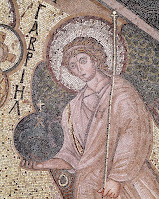
Fascinating online lecture form the London Art History Society discussing medieval wall mosaics. Liz James from the University of Sussex took us though the practicalities of producing wall mosaics in the Medieval period using the works in the apse of the Church of Panagia in Kiti in Cyprus as a starting point. She briefly took us though the image but the talk mainly asked questions about how they got there and tried to answer them with observation and logical thinking. How do you design a building which is going to take the weight of a mosaic? How do you get the tesserae to the building site? Do they arrived coloured or does the artist have to do that? She acknowledged she might not have the answers but presented a starting point for thinking about the topic. It was a refreshing and exciting approach to art history.

Picasso: Prophet or Profit?

Image
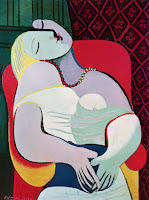
Interesting online study day from the London Art History Society on Picasso. Jacqueline Cockburn took us through Picasso’s life highlighting four key periods. It was clear and well-illustrated but I felt I would have liked even more to fill the gaps. We started with his early life in Malaga and Barcelona, looking at what a good draughtsman he was and how some of the subjects he started painting then continued throughout his life. I hadn’t realised how much his family had moved around in his youth. We then moved to the early years of his life in Paris Including the death of his friend Casagemas and the effect that had on his art, bringing in the blue period leading to “Les Demoiselles d’Avignon” and Cubism. After lunch we moved on to his muse Marie-Theresa Walter. This was my favourite section as we were taken through the different ways he approached her as muse at different periods of their relationship. We ended with his series of works from the 1950s examining and deconstructi...

Notre-Dame Cathedral de Paris: five years on

Image
Clear and intriguing online lecture from the London Art History Society on the restoration of the Notre-Dame Cathedral five years after the major fire. Alexandra Gajewski, reviews editor of the Burlington magazine who has a phd in Gothic architecture, led us through what was lost and what survived then the three stages of construction, securing the building, analysis of the fabric and restoration. I hadn’t realised that the site had to be closed for about 5 months early on when it was discovered that the levels of lead were too dangerous to work in the whole structure had to be hoovered to make it safe. I was fascinated to hear how the stonework which survived had to be supported until the roof, which stabilised it was replaced. The first service is planned to take place on 8 December and I will look out for it with interest.

The Normans in Southern Italy

Image
Confusing online course from the London Art History Society on Norman influence on architecture and material culture in Southern Italy. I say confusing because the history and many of the architectural terms were new to me. I think some people on the course had already done others with the speaker John McNeill so were more familiar with some of the background. It would have really helped to have a glossary of terms and an outline of the people and dates involved in the handout for reference. I know my English Norman architecture of the 11th and 12th century quite well so it might have helped me to make comparisons or say more about why they were different. McNeill had some great illustrations, I suspect many of which he had taken himself, which gave a good sense of the buildings many of which were now ruins. He made good use of floor plans but I’m afraid I did confuse them over time and they were very similar. That said I discovered some wonderful sites and have definitely added ...

Nicolas Poussin (1594-1665): ‘Peintre Philosophe’ in the age of the Baroque

Image
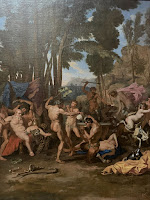
Excellent online course from the London Art History Society looking in depth at the life and work of Nicolas Poussin. Over five weeks and ten lectures Giulia Martina Weston led us thought the themes in Poussin’s work, placing him within the context of his time. The 17th century isn’t a period in art I know very well so as well as learning about the artist I also got a good overview of the art market in Italy and France at the time. I was fascinated by hearing that critics at the time talked about Poussin as the anti-Caravaggio and the New Raphael. I must admit in the Caravaggio v Raphael argument I’m with the former so I felt that explained why I don’t feel drawn to Poussin. Despite not being a fan of Poussin I feel I will now get a lot more from looking at his work as I now understand his philosophy from his Neo-stoicism, his vision of art as poetry and how he used biblical and mythical texts, his repletion of images like the variations in music and use of the antique. We als...

Guston Now

Image
Excellent online study day from the London Art History Society on Philip Guston. Ben Street took us clearly through the different phases of Guston’s career from figurative painting to abstraction and back to figurative work. He explained the themes of the work and placed the in the context of the times in which they were painted. I didn’t know Guston’s work but wanted to see the exhibition at Tate Modern and was looking for a good introduction to the artist and this gave me a good grounding for when I did see the show a week or so later (watch out for my review of that). Street had covered some themes which didn’t come out clearly in the show and I felt it gave me a chance to view the work without obsessive reading of labels.  

Modernity and Reaction in European Art 1890-1945

Image
Interesting day of lectures from London Art History Society held at Friend’s House on the reaction against Modernist art by the dictators of the inter war years. Richard Humphreys organised the talks by country starting with an overview of what was happening at the centre of the avant-garde in Paris. We tend to concentrate on the major modern movements which started there like Cubism and Surrealism but Humprey’s looked at the reaction against these movements often led by the right wing and nationalism. He then used this discussion of the reaction to lead to talks on Italy and Mussolini, Russia and Stalin and Germany and Hitler where similar themes and subjects emerged such as the role of technology and how it represented in art, the desire to memorialise and use the history of the countries and the propaganda use of art. Because of the similar themes the country talks became a bit repetitive so I wonder if it might have been better to arrange it by theme, flagging what was happe...