Posts

Showing posts with the label science

Can Science be Entertainment? Wright of Derby and Our Love to Learn

Image
Well thought out online lecture from the National Gallery examining how and why science became entertainment in the 18th century. Matthew Morgan laid out a clear argument about how science was developing in this era and how people responded to this particularly in the circles of Wright of Derby. He looked at Rousseau’s ideas about education who advocated for learning by display rather than reading. He told us about various scientific experiments which were conducted in private houses or public spaces. I’m sure I’d have booked for a lecture at the giant Orrey at the Theatre Royal in the Haymarket. As usual with Morgan’s talks there was a good Q&A session at the end covering the difference between curiosity and learning, a comparison between the 18th century displays and Brian Cox’s podcasts and the role of women as they frequently appear in Wright’s paintings of scientific displays.

Versailles: Science and Splendour

Image
Excellent exhibition at the Science Museum looking at scientific discovery at the Court of Versailles. This was a clearly described show, cleverly laid out and with some stunning objects and paintings. It’s not a period I’ve ever studied but I am increasingly drawn to it. From realising that the three Louis’s of the period ruled for 149 years I was hooked. The show was full of intriguing stories and people and lead to a lot of Googling, both in the show to check links my brain was making and since. I give you Antoine-Augustin Parmentier who argued that potatoes were the answer to famines caused by bread shortages and declared them edible in 1772 or Madame de Genlis, tutor to the royal children who commissioned this model of a chemistry lab. Throw in a stuffed Rhinoceros killed in the Revolution, some wonderful paintings, including a portrait of the first pineapple grown in France, and the knife used to operate on the kings anal fissure, then there was something for everyone! C...

Growing Curiosities: The Science of Gardens

Image
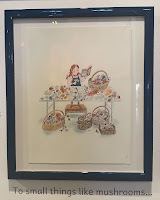
Charming exhibition at the Garden Museum, aimed at children, looking at the science of gardening. Based on books by zoologist and author, Nicola Davies, illustrated by Emily Sutton and Mark Hearld the show combined original artwork and simply written explanations of scientific phenomena like microbes. It felt a bit wordy for children but the text was clear and interesting. I loved the delicate illustrations. Closed 14 September 2023    

Science Fiction: Voyage to the Edge of Imagination

Image
Imaginative exhibition at the Science Museum looking at what science fiction tells us about our relationship to space and the world around us. This was a stunningly produced show and immersive experience where you are introduced to each section by an supposedly AI concept called ALANN. It introduced some fascinating ideas linking reality and science fiction. However if you were going for a history of sci-fi and lots of objects you might be disappointed. Quite a large proportion of the objects seemed to be replicas although there was an original outfit from Lieutenant Uhura from Star Trek and Boris Kharlov’s costume for Frankenstein. I’d have liked a bit more on the evolution of sci-fi rather than the heavy use of it to explain current and future science. There were good interactive experiences and quizzes which were all working even if I had to be shown what one was doing! A good show for sparkling children’s imaginations. Closes 4 May 2023 Reviews Guardian Telegraph

Ancient Greeks: Science and Wisdom

Image
Disappointing exhibition at the Science Museum looking at how the Greeks sought to understand the world around them. I say disappointing because it was a small show and the subject deserved a lot more space and objects. It was cleverly laid out with the subject areas based on the muses and the first object was a rather beautiful sarcophagus with the nine muses one which was projected a clever AV introduction to the show, however it all felt a bit thin. The picture comes from a section on how Aristotle classified animals and sea creatures and comes from a wonderful selection of platters with accurate sea creatures on them. Another section looked at the idea of the ideal body   and how sculptors generated the proportions for a statute based on multiplications of the smallest joint in the little finger. I was most interested in the section of music and how they studied the mathematics of it. It was interesting to see a pair of pipes which would have been blown simultaneously. ...

A Scientific Approach

Image
Innovative online lecture from the National Gallery looking at how artists have embraced science and how they have depicted it. Nick Pace took us on an interesting journey through the scientific endeavours of Leonardo Da Vinci and Durer from their studies and prints of drawing devises through their anatomical and botanical works and Leonardo’s geological studies. He then turned to the Enlightenment and in particular Joseph Wright of Derby to look at how artists of that time depicted new scientific developments. It is always good to revisit Wright of Derby’s work and it was nice to discover a new work by Jacques Louis David of Antoine Laurent Lavoisier and Marie Anne Lavoisier from The Met showing the couple with their scientific equipment.

On Edge: Living in an Age of Anxiety

Image
Strange exhibition at the Science Gallery looking at anxiety and how an anxious state can fuel positive action. I admit I’d already done a lot that day but I found this show difficult to understand and instead of enlightening me on the topic of anxiety it seemed to bring it on. There were some interesting installations blending contemporary art and science but I found them quite confused and difficult to understand. I liked Alice May Williams’ paintings based on the colours of women’s football strips and using supportive phrases from coaches and Cian McConn’s “Some People Have No Shoes” which lists observations of others which changed his self-criticism of himself.   I like the work shown which by Sarah Howe which used mirrors and blocks to reveal and hide videos of repeated gestures of anxiety. It induced a feeling of confusion and a desire to work out where images were coming from. Closes 19 January 2020

Science Photographer of the Year 2019

Image
Intriguing exhibition at the Science Museum organised by the Royal Photographic Society of prize winning science photographs. The show had some lovely quotes around the walls on science and looking including from Proust “The real voyage of discovery consists not in seeing new lands but in seeing with new eyes”. A lot of these pictures illustrated this by taking pictures from new angles or using photographic techniques to show something which couldn’t be seen with the naked eye. There were some astonishing images such as the attached by Norm Baker of a collection of gall stones and Kym Cox’ picture of a close up of a soap bubble. I also loved Viktor Sykora’s close up of a stage beetle. My only criticism was why the room was so cold when I went! It would have been nice to linger a bit longer over some of the images but you had to keep moving to keep warm. Closes 5 January 2020

The Art of Innovation: From Enlightenment to Dark Matter

Image
Fascinating exhibition at the Science Museum looking at how artists and scientists explore new ideas. I’d been looking for an exhibition like this for a while with the art of the Enlightenment at the heart of it. The show told 20 stories over four themes to highlight interactions between scientists and artists and how they inspired each other both then and over the centuries since. From the first large picture by Joseph Wright of Derby I was hooked. The first section looked at sociable science and explained the ideas of the Enlightenment via the Wright of Derby picture. It also had a fascinating section on the invention of artificial dyes in the Victorian era and the reaction against them from artists and designers. All art types were covered so a section on the invention of artificial fibres used the film “The Man in the White Suit” as its artistic example. It also looked at how Polaroid partnered with Ansel Adams to promote its cameras. My favourite section, Troubled H...

Hooked

Image
Thought provoking exhibition at the new Science Gallery at King’s College London looking at addiction. The show uses both scientific discoveries and contemporary art to look at when habit becomes an addiction and when pleasures become darker. I was fascinated by the section which looked at phone and digital addiction which got me a bit worried about the amount I use my phone.   The commentary pointed out how addictive behaviour increased activity in the brain’s reward centre which creates dopamine and discusses how recovery processes deal with that loss of dopamine. Works I enjoyed included “No Change” a slot machine by Kyros which just shot your money back out at you and the broken sugar table pictures here. Also a screen which just says “Please don’t like this” with a Like button, needless to say 274 people had pressed it when I was there and I must say it was very tempting and “The Curtain of Broken Dreams”, made by Natasha Caruan made of found gold rings. Close...

Illuminating India : 500 Years of Science and Innovation

Image
Interesting exhibition at the Science Museum looking at India’s long tradition of scientific and innovative thinking. The show was divided cleverly into three key areas, observation, calculation and innovation. Within each of these it then looked at historic and contemporary achievements using some fascinating examples. I loved seeing Everest’s theodolite as I have helped to organise an exhibition at work (RICS) which includes a model of the theodolite so it was wonderful to see the real thing. There was also a lovely drawing of Everest at work. I was also fascinated by a scrap of manuscript which includes the first recorded use of zero as a number. Our numbering system of a repetition of the repetition of the numbers 1 to 9 and zero comes from India. Closes on 22 April 2018 Reviews Times  

Robots

Image
Fascinating exhibition at the Science Museum looking at the history and future of robots. The show defined robots as mechanical humans and seeing that helps as at times I felt it was more about automatons rather than my idea of robots which have a degree of learned behaviour about them. I was amazed that the show started in the Medieval and Renaissance periods by looking at the church’s use of clockwork machines to explain the heavens and the human body. I loved a delightful mini-monk which could walk across the table. The next section looked at the role of automation in the Industrial Revolution followed by a section on robots in the imagination. This was full of iconic references in popular culture including a replica of Maria from Metropolis, a robot boxing toy I remembered from my childhood and T-800 from Terminator Salvation. A big central display focused on how robots have been built moving from early examples from the 1950s to up to date work. It discussed the ...

Making Nature: How we see Animals

Image
Strange exhibition at the Wellcome Collection looking at how we think, feel and value animals. It wasn’t until the 18th century that we started to seek a scientific explanation of the animal world and there was a really good section on Linnaeus and his work to classify and name all the species and he was the first person to define humans as animals. It claimed that how he defined a hierarchy of species has influenced our thinking ever since. The middle room looked at how we display and look at animals. I must admit to being slightly freaked by the examples of taxidermy hidden round the display. There was a sweet fox asleep under a display case! There were good sections   on zoos and natural history museums, how they have changed and how their design has influenced our thinking. I was also very interested in cases on William Hornaday, a taxidermist for the Smithsonian who realised that in collecting some of the last bison for the museum he was contributing to them becom...

Electricity: the Spark of Life

Image
Fascinating exhibition at the Wellcome Collection looking at electricity, focusing on its generation, supply and consumption. It wasn’t till I started going round this exhibition that I remembered I used to work in the electricity industry, how could I have forgotten! Despite this I’d never thought about how the electricity industry developed and how the infrastructure like the National Grid was developed. The first section looked at early observations of natural electricity and how we started to generate it. I was very amused by an early experiment to pass a charge around a group of people with a wonderful picture of 180 of Louis XV’s guard trying the trick and then a wonderful film of 1950 scientists trying a similar thing with an electric eel. I loved the section on supply which included one of the first batteries but I most interested to see that the Grosvenor Gallery, known to me as holding Impressionist exhibitions, was one of the first buildings in the UK to us...

The Winton Mathematics Gallery

Image
Newly designed gallery at the Science Museum designed by Zaha Hadid. This is a striking space with a wonderful installation in the middle based on the air displacement of the plane which hangs in the centre of it. The structure is a beautiful flowing shape made of a stretched canvas with a thick metal edge. The whole thing is lit in a purple light. It leaves two spaces one of which has the plane in it and a video about the new design. The other is currently empty with benches round it which I hope will be used for gallery talks. I loved the fact the shapes also played out on the design on the floor and in the ceiling lights throughout the gallery. The display space in the rest of the gallery is also good with nice themed displays on the role of the maths in society linking the old and new within each section. These link well to the installation and weave around it.   Reviews Times Telegraph Evening Standard  

Colour and Vision

Image
Fascinating exhibition at the Natural History Museum which addressed lots of questions about vision. How did it evolve? Do animals see as we do? Without an eye to see it does colour exist? What is the benefit of colour? In my rare philosophical moments I sometimes wonder if we all see colour in the same way or whether we just think we do because we give it words based on comparisons, but this show left me lots more musings! I loved the idea that at the dawn of life the world was monochrome as organisms didn’t have eyes so there was no point in colour. The first vision was just telling light from dark but as eyes evolved behaviour changed to complement this. If your predator could now see you, you had to move more or develop a trick to put them off eating you! I loved the section on seeing colour. Humans just see three colours but our brain integrates these and merges them using memory. Primitive creatures see and receive more colours but only because their brains can’t then...

New Eyes on the Universe

Image
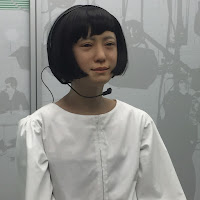
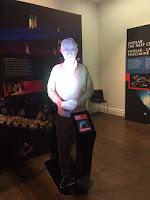
Innovative exhibition at Canada House looking at the work of Canadian 2015 Nobel Prize winner in physics Dr Arthur B. McDonald. This was   a great use of the space in this small gallery which usually just hangs pictures around the walls. It explained the work of the Sudbury Neutrino Observation Laboratory built in deep mines in Sudbury in Canada. I’ll admit I didn’t understand most of it but it still felt impressive to learn about this ground breaking work. There were lots of good av installations to explain the subject including a life sized Dr McDonald which talked to you. This was an amazing flat screen shaped like a person with a projection onto the back. It was eerie but effective. Closes on 17 September 2016

Wellcome Image Awards 2016

Image
Interesting exhibition at the Science Museum of the winner and shortlists works in the Wellcome Image Awards. The commentary says the awards aim to showcase the best in science image making and they include ordinary photos, digital photos, clinical photography and painted and drawn illustrations. Each picture had a good commentary with them giving a explanation of what was being shown and details of the methods used to produce the picture. I loved a picture of moth scales by Mark R Smith where the colour was created from light on the scales, the scales themselves where not actually coloured. Also a stunning picture of an allergic reaction to a henna tattoo by Nocola Kelley which showed the skin raised and blistered and yet covered by a beautiful intricate pattern. Closes on 19 June 2016  

Leonardo da Vinci: The Mechanics of Genius

Image
Fascinating exhibition at the Science Museum looking at the inventions of Leonardo Da Vinci. The exhibition was based on models made for an exhibition in 1952 in Milan which were shown against reproductions of paintings and sketches. There were really good interactive displays to help you understand the science of the   machines which would be great to catch children’s imaginations. I liked the labels on the objects which classed them as innovative, a development of a previous idea or an idea which wouldn’t have worked in practice. I loved the section on the war machines and designs for fortifications particularly as many of these were designed for Cesare Borgia and I’d just finished a book about him. Also the section on the work he did to improve manufacturing for the Sforza’s in Milan. Most visually dramatic was the section on how he imagined ways in which man might fly. It described how his ideas developed as he realised that human muscle power would be insuffi...

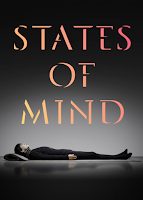
States of Mind: Tracing the edges of consciousness

Image
Thought provoking exhibition at the Wellcome Collection looking at what consciousness is from a medical and a philosophical point of view. The show tackled this difficult topic by looking at a range of experiences on the edge of consciousness. The first looked at the difference between the body and the soul by investigating neuroscience. This included one man who pressed unexposed photo plates onto people’s foreheads to see if he could capture thought!   The section on sleep and awake included a creepy sculpture by Goshka Macuga called “Somnambulist” of a very realistic sleeping man in the middle of the floor. It also looked as mesmerism and how other generations have tried to explain dreams. The final section looked as disorders of consciousness either through brain injury or trauma. This includes the idea of false memories which was fascinating. Closes 16 October 2016 Reviews Guardian Evening Standard